I find I'm having much much fewer of Those Days now my kids are nearly five (yes I know, it's a lull between difficult patches), but when they were babies and toddlers and upwards I had plenty of them.
There is a great post here at a blog called Seeking Sanity which I thought was a beautiful, eloquent and honest picture of life with small kids.
Loved it.

Sep 25, 2010

The Lazy Garden(er)
It's a sorry roll-call to be sure. It's springtime, and after record rainfalls and the end of the 12-year drought, these are ALL the flowers I have in my garden.


But that's better by a long shot than the rest of the garden, which generally looks like this:


Again, I ask you - who has the time???
Sep 24, 2010
Just Believe!
How do you know when your daughter has watched too many Barbie movies?
(Real answer: When you know she has watched at least one...)
Here's how I knew.
A broken toy, a request to fix it. Knowing the toy was beyond repair, I answered that I couldn't fix it.
M. looked at me and said, "Did you try to fix it?"
"Yes," I said (lying - it was completely beyond help). "I tried, but I couldn't fix it."
M. looked at me earnestly. "You can Mum, " she said. "You just have to try. And believe in yourself!"
"Well, " I said, "sometimes, there are just some things you can't do, even if you really believe in yourself!"
Aug 30, 2010
Parents, you were right about what your baby or young child knows...
Here is a link to Alison Gopnick's website.
I love love love this woman's work. She has turned notions of what young children comprehend and how we learn to see the world, completely on their head.
One of the most interesting findings in 'The Philosophical Baby' to me is the study where really young babies look longer at objects performing feats outside the laws of physics, showing they are surprised.
We have always been told that young children cannot distinguish between fantasy and reality, and I had not questioned that until I had kids. The truth is more complex. Yes, sure, they can get confused. When my girls were in the first 6 months of being four they would still sometimes watch a cartoon they liked and ask me if we could "go there". Now they are closer to five, they know TV is not "real" but they will still sometimes ask about places they see on ads or movies (not cartoons anymore though).
On the other hand, even from a very young age (2, 3), they were well aware of what was funny in cartoons because it is not real, and what can and can't happen in real life. I was often surprised by how much little kids understand of what is going on around them.
Some observations I love to remember:
My cousin's little girl E, is one. At a recent family gathering, my sister was there with her baby. My sister set her baby down in a rocker in a corner and little E was fascinated. She toddled over to look at him at regular intervals. One time when she came over, unknown to her, someone else had picked up the baby and he wasn't in his rocker. Little E looked at the rocker, looked surprised, then immediately turned and reached a hand to my sister for a moment before walking off. She had never met my sister before, but this one instant showed that she expected the baby to be in his rocker, and that she knew the baby was connected to my sister and my sister should know where he is.
My girls are getting a growing knowlege of cause and effect. Very often, to my astonishment, they get cause and effect right, even if I can't remember having told them about how something works. Sometimes they get it wrong of course. Recently one evening it was very windy and the girls were a little uneasy at bedtime hearing the howling outside the house. A hadn't eaten much dinner, and at bedtime she said to me "Mummy when that wind is blowing it makes my tummy so hungry!"
(Yeah the classic rookie mistake - causation vs correlation!)
M loves to classify things. When we started to put a more sensible bedtime routine in place this year (i.e., an actual bedtime routine), we went through a phase where I would sit by her bed and she would ask me the same questions every night, starting with the names of her cousins and aunts and uncles and who was married to whom, who was parent to whom, and who lived with whom. Her current questions go through the days of the week and what routine we follow on each particular day. Obviously these things comfort her, and are also a little bonding bedtime ritual for us, but she also takes a lot of pleasure in learning these things, then moving on to the next phase of questions once she has mastered them. (Though these days, AT LAST, we are able to kiss them good night and leave the room within a few minutes instead of the hour this took at the beginning).
Last weekend I spent some time with my girls at my mum's place babysitting my sister's baby. He is a beautiful laid-back boy, always very happy and very interested in everything around him. As he gazes at various objects you can almost see wheels turning in his head, a slight frown of concentration on his brow. When you hold him and talk to him he gazes right in your eyes and when you sing he errupts into smiles and gurgles. It is definitely a form of communication. M was fascinated with him and spent a lot of time talking and laughing with him, and as she moved around the room he watched her intently, interest and expectation all over his face.
It's a wonderful wonderful world...
Betting on the Federal Election Vs. Following the Opinion Polls
The Australian Federal election is still undecided with each party on 72 seats and 4 independents about to decide the "winner". (Poisoned chalice that it will be).
Interestingly throughout all this "uncertainty" the stock market hasn't skipped a beat. People are saying this is because there is no real uncertainty because the vote is between two parties with very similar policies (or similarly unknown policies); or each party offers some good and some bad for business so each is cancelling the other out. Or as more than one radio commentator has put it, it appears we don't need a government at all...
What's been interesting has been the rise of the "betting market". You can bet on anything in Australia, and for the last few weeks the betting in the election outcome has been tracked as keenly as the opinion polls. In fact more keenly, as there is a general belief that the betting market provides a more accurate predictor than the polls.
Why is this?
Today according to SportingBet the odds are $1.45 on the Coalition and $2.65 on Labor. The "market" is "pricing" the Coalition to win.
Why would betting odds be more accurate than opinion polls? The theories go:
For more - and better informed - information on the nature and accuracy of predictive markets see Wikipedia at this link: http://en.wikipedia.org/wiki/Prediction_market
ADDENDUM, two weeks later: Labor finally won, and there has been less talk lately about the accuracy of the betting markets! This was a uniquely weird election though, so hard to say.
Interestingly throughout all this "uncertainty" the stock market hasn't skipped a beat. People are saying this is because there is no real uncertainty because the vote is between two parties with very similar policies (or similarly unknown policies); or each party offers some good and some bad for business so each is cancelling the other out. Or as more than one radio commentator has put it, it appears we don't need a government at all...
What's been interesting has been the rise of the "betting market". You can bet on anything in Australia, and for the last few weeks the betting in the election outcome has been tracked as keenly as the opinion polls. In fact more keenly, as there is a general belief that the betting market provides a more accurate predictor than the polls.
Why is this?
Today according to SportingBet the odds are $1.45 on the Coalition and $2.65 on Labor. The "market" is "pricing" the Coalition to win.
Why would betting odds be more accurate than opinion polls? The theories go:
- bets are placed by insiders in the know
- people lie in opinion polls but not with their betting money
- predictive markets with two choices tend to mirror a "mean average" result which mirrors reality, where the beliefs of the participants are evenly spread out, and the participants are betting to win
For more - and better informed - information on the nature and accuracy of predictive markets see Wikipedia at this link: http://en.wikipedia.org/wiki/Prediction_market
ADDENDUM, two weeks later: Labor finally won, and there has been less talk lately about the accuracy of the betting markets! This was a uniquely weird election though, so hard to say.
Aug 29, 2010
When science is diluted... or just wrong
If you live in Australia you will know that for the last 20 years it has been a crime or at least a horrific sin againt society, health and right thinking to be outdoors for any length of time without being covered head to foot in 30+ sunscreen and a hat - and that's just at nighttime!
We have been told to wear sunscreen every day regardless of sunshine or temperature, and to avoid being in the sun between 11 and 3. (That puts rather a dampener on most summertime activities. On the other hand it's a good excuse to stay inside days over 35 degrees if you are heat intolerant like me).
Earnest advice from most quarters has been advising for so long that the sun is unhealthy and dangerous, that most of the extreme advice above has been accepted more or less without question.
But the truth is rarely at the extremes. (I had written "never" but that's an extreme...)
Now it turns out that Australia is experiencing an increase in cases of rickets, with a University of Melbourne study finding significant numbers of people in its study to be vitamin D deficient, and the Paediatric Surveillance Unit finding nearly 1300 Australian children under 15 develop rickets each year.
Rickets.
In a first world country, in the twenty-first century.
Rickets!
Because, it seems, people have taken to heart the very strong, long-standing, scary and persistent advice to stay out of the sun, to the point where they or their children are not getting enough vitamin D.
Yes we know that Australia has one of the highest rates of skin cancer in the world, and no one wants to go back to the days when I was a kid, when we would all get so sunburnt every summer it was a regular evening activity to peel each others' skin off our backs, and you'd graduate each summer with a few more freckles and a redder nose than last year. But why do we go from one extreme to the other?
Why does the general wisdom on what's healthy and what's not seem to do back-flips and see-saws between different positions, when logic would say that a middle ground must be best?
We know that scientific findings are always being challenged and extended, modified, or overturned, but in the areas of health and well-being the changes are dizzying. Usually the blame is laid with the media for watering down or sensationalising scientific findings, or science outfits after funding publicising their work prematurely or following a popular angle. These things are a factor. Is there something more?
For some reason we don't seem to be able to get a handle on the most basic aspects of what's good for us and how much of things we need (such as sunshine).
Weight and nutrition are other ones. How much meat should you eat? How much dairy? Should you eat dairy at all? I remember a comedian years ago saying "Here is a question you cannot answer. Milk: good or bad?" It was funny. It was true. Years later we still cannot answer it, officially. But unofficially, inside most people's heads, the answer is obvious: good, in moderation.
Here are some other bits of common wisdom, all derived from valid scientific studies, where some part of the finding has been stripped out and repeated for years until it has become something most of us accept as truth - until the next study, some time in the next 2-10 years, flips it on its head.
Drink at least two litres of water a day and more in summer.
Thirst often masquarades as hunger; if you think you feel hungry you may actually be thirsty.
Obesity leads to cancer, heart disease and diabetes and is a huge cost on the health system.
Raw food is better for you than cooked food [and yet humans have been cooking food for millenia].
Organic vegetables are better than intensively farmed vegetables [and you know what, they probably are. But seriously with 7 billion people, what are we going to do].
A glass of red wine a day promotes longevity.
Blueberries, broccoli and others are superfoods which contain antioxidants which cleanse the body and flush out toxins.
A Mars a day helps you work rest and play. Just kidding - that one did not come from a scientific study. But it was acceptable as an advertising jingle for a long time, hard as that is to believe now.
I have just realised everything I have listed here pertains to nutrition.
One of the key obsessions of our time, and one of the worst areas for yo-yoing advice in pop science.
Much of the stuff we read or are told is from preliminary or incomplete studies and confuses correlation with causation.
Here is a good example.
For some time now it has been said that being overweight hinders women from falling pregnant, and the reason was possibly something to do with the way fat cells interfered with hormones.
Then another study was done, and this time it seemed people spoke to the women or observed their behaviour. Turns out the reason for lower pregnancy rates is actually that overweight women are self-conscious about their bodies and have sex less often.
Like, DER.
How often do you read these "latest findings" and feel angry? How often do you feel cynicism, or fear, or depression or despair? Do you think "Not this old thing again" or "Wow, that doesn't sound right, but I guess those guys know...". Or do you think "Oh no! How will I fit this one in too?" or "Bloody hell, what are we meant to be doing this year then?" Or do you let it all pass over your head and just get on with your life? (Easier said than done).
As the classic - and perenially true - wisdom says: Moderation in all things.
Aug 11, 2010
Work projects done? Check. Shopping and cooking? Check. Time with family? Check. Nervous Breakdown? Check!
Okay, time to be honest.
I started this blog for a few reasons: to get back into practice at writing, give myself an outlet for ideas and creativity, psych myself up to become a "real" writer, and to put together some stuff to provide a viewpoint of a mother who also works full time. Everything in the culture at the moment seems to be about women working part-time or spending their children's preschool years at home. Both options are great, but the commentary and assumptions contained in most of the written stuff I see often don't fit my life. There is seemingly NOTHING about or by women working full time and how they parent and how they cope.
I know there are plenty of women doing this. They are all just too busy to write articles!
However.
Logically knowing something and remaining positive about it are two different things.
It's all too easy to get a bit down and start believing you're in a tiny minority of women breadwinners and full-time working mothers. I know, boo hoo! I'm not carting water home from a village well, right?
Still - it can get hard.
So I wanted to try and source, and write, some stuff about and for the full-time-working mother, to put a positive and helpful slant on a lifestyle that few portray positively. I do believe there are plenty of women out there living this life who are happy with it, achieving well and simply ignoring the rubbish we sometimes see in the paper and hear from well-meaning people about work, childhood, daycare and the like.
But it has taken me a long time to reconcile myself to how I'm living, and I have not got my own balance right.
I am currently on 10 days' sick leave from work, due to stress and exhaustion. I could use longer, but this time has calmed me and I have booked a 2 week family holiday in November which will tide me over to the end of the year.
After that - new year new job new life...
Aug 10, 2010
Schools
Hmm, what to do?
Having grown up attending local government schools and being big believers in public schools, we have already decided our kids will be attending some sort of local government school.
I also believe in the general idea of "good enough" and that local, close-to-home is the most important criterion for a primary school, so kids are close to friends, feel connected with their community, and are not sapped by commutes every day.
But what do you do when the local school gets "mixed reviews" to put it mildly?
How good does "good enough" have to be?
At what point does a better school outweigh the disadvantages of having to travel further and kids not having friends round the corner?
Our local school: pro's:
Unfortunately we didn't get to speak to the principal; I will do some "research" (i.e., Google searches) and see what we come up with, and see if we can make an appointment to talk with him soon.
I am also comparing our local school to two other schools we have seen which seem FANTASTIC but are further away; one of them, though still in our suburb, is a good 15 min drive away against traffic.
And of course, six years of school is a long time - a lot can and does change within individual schools over the course of six years. Teachers and principals come and go, and the national "education revolution" is bringing changes that should improve all schools.
Sigh. I did not intend to make this a difficult decision. It was always going to be "the local school".
Ah well, we shall see.
Having grown up attending local government schools and being big believers in public schools, we have already decided our kids will be attending some sort of local government school.
I also believe in the general idea of "good enough" and that local, close-to-home is the most important criterion for a primary school, so kids are close to friends, feel connected with their community, and are not sapped by commutes every day.
But what do you do when the local school gets "mixed reviews" to put it mildly?
How good does "good enough" have to be?
At what point does a better school outweigh the disadvantages of having to travel further and kids not having friends round the corner?
Our local school: pro's:
- ten minutes' walk away
- small, friendly
- very diverse
- nice colour uniforms which don't need ironing
- has a new principal who is making changes and concentrating on data/internet, maths, and encouraging local kids to ride bikes to school
- our neighbors' kids went there and they were happy with it (if not ecstatic)
- NAPLAN results on MySchool website seem good (so what's the problem?)
- before and after-school care the most convenient hours of the 3 schools we've seen (we will need this 2-3 days a week)
- I have heard from 3 sources now (including a teaching student who just did placement there) that it's not a very good school, grades are not good, teachers are not the best, etc.
- when we visited today it looked fine except the teachers we saw and the kids we saw in a couple of the classes didn't seem as "engaged" as we saw in other schools (but other classes we saw looked fine)
- does religious education; then again, no harm in kids having exposure to this as it's part of the culture etc - I can always undermine it from the sidelines the way our mum did for us! (thank you mum)
- small grounds - but is this such a problem?
- most of the teachers seem to have been there a long time
Unfortunately we didn't get to speak to the principal; I will do some "research" (i.e., Google searches) and see what we come up with, and see if we can make an appointment to talk with him soon.
I am also comparing our local school to two other schools we have seen which seem FANTASTIC but are further away; one of them, though still in our suburb, is a good 15 min drive away against traffic.
And of course, six years of school is a long time - a lot can and does change within individual schools over the course of six years. Teachers and principals come and go, and the national "education revolution" is bringing changes that should improve all schools.
Sigh. I did not intend to make this a difficult decision. It was always going to be "the local school".
Ah well, we shall see.
Aug 9, 2010
Smug List / Crap List
This is an idea floated by Mia Freedman, author of the wonderful blog Mama Mia - LOVE her, this blog is like a magazine without the silly bits (horoscopes etc). Mia’s suggestion is for more mothers to share those two secret lists they hold in their hearts about how they raise their children: the Smug List (things they know they do well) and the Crap List (things they’re ashamed of or feel bad about). Naturally everyone’s Crap List is longer than their Smug List. The Crap List is the best because reading someone else’s makes you feel better about your own.
So in honour of all that, here are my own lists.
SMUG LIST
1. I ate very sensibly during pregnancy and only gained 14 kilos, even carrying twins (You see, I preferred to put on an extra 15 kilos AFTER the babies were born).
2. My girls were carried to term (2 weeks early for twins = to term), and were a good size and healthy. (Though I know this is actually called “luck”).
3. I have always prepared nutricious, balanced and varied meals for my children and model good eating by eating the same foods with them, being enthusiastic about the meals, and we all enjoy our vegies.
4. I play word games, sing, dance, do nursery rhymes and read and make up stories.
5. I always took my kids for walks from a young age even if it was cold, we just rugged up.
6. Our days follow routines that the girls know and like, and we don't try and cram in too much on weekends.
7. We are teaching the girls their "heritage" language in a relaxed and gradual way without putting pressure on them, and using fun things like songs to do it.
8. I think I strike a good balance between getting the girls to help with things like packing up and just letting them play and have fun and not being too strict about it.
CRAP LIST
1. Other than walking or going to the park, I don't do physical stuff very much - very few outdoor games, football, etc
2. We've never taken them camping or to the snow
3. We have been a bit slack with swimming lessons; luckily, school starts next year with swimming lessons built in.
4. My kids tell me whenever they ask me to come to them or help them with something my response is always "Okay, in a minute..." They also know and use the phrase "You're giving me a headache!"
5. We watch DVDs way more than we read books together.
6. Every Saturday morning I leave the girls with cartoons on TV while I read the paper and have a coffee.
7. I sometimes finish my kids' sentences for them - very bad, trying to stop
8. I have worked way too late on more than the odd occasion, and not been home early enough to enjoy my kids before bedtime.
9. When I am tired and over-worked I get mad too easily and I sometimes yell when I can't get the girls to do what I want. Taking steps to avoid this these days.
10. We have been hopeless at establishing good bedtimes - see post here on same. Hopefully getting better now.
11. I haven't completed any photo albums - not even the baby album.
12. I bought the Lady Gaga CD on a whim (without vetting it first) because my 4-year-old girls love her, then had to try and stop them singing "I want to ride on your disco stick..."
One could go on...
Some Beauty
A bit of beauty to get us through the day -
These were taken at Bright, in Victoria, in May during autumn.


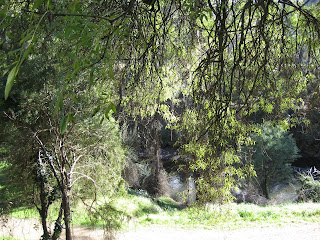

These were taken at Bright, in Victoria, in May during autumn.


Subscribe to:
Posts (Atom)
LinkWithin
